On Tuesday we attended ID@Xbox London event. Here are our impressions
Actually, we attended the pre-event bar and drinks session on the Monday evening before the main event, and it was probably more useful than the event itself! We got to talk to a whole bunch of the ID@Xbox and wider Xbox team, and even had a chance to impromptu demo our game Soul Machine on Jay’s laptop.
For those not familiar with ID@Xbox, it is the name for the program under which developers can self-publish their games on Microsoft’s new Xbox One console. While primarily aimed at indie game developers, it is open to pretty much any studio or developer.
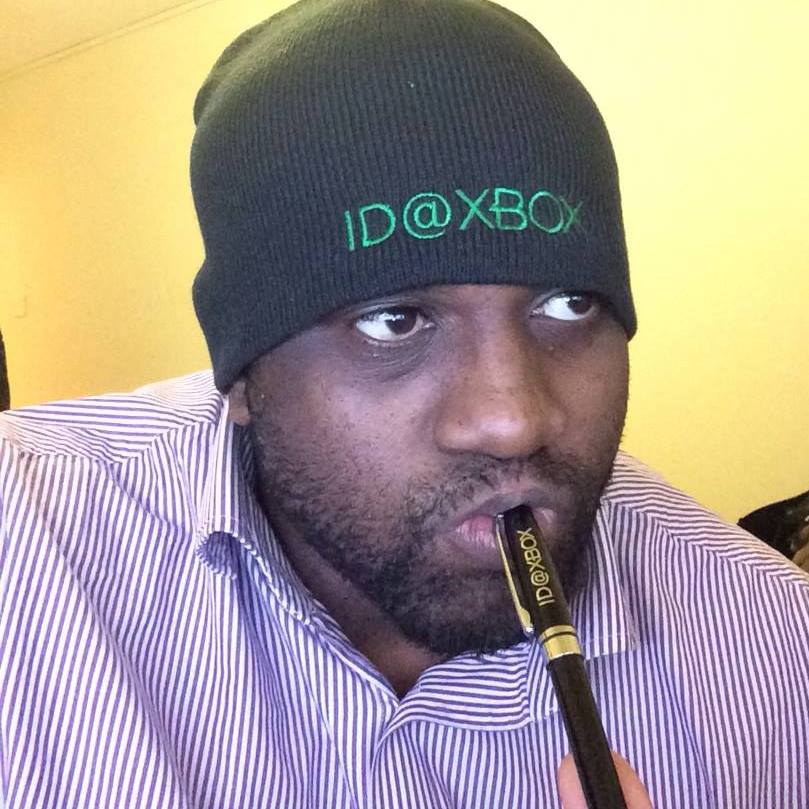 Jay dreaming up new ideas for Soul Machine with his id@xbox thinking cap on
Unfortunately, we can’t splurge a bunch of details about what we heard, because the whole thing was done under NDA. But I’ll try and convey as much of our general impression of the event and the ID@Xbox program as I can, hopefully without jeopardizing our chances of working with Microsoft in the future. In fact, I think I can safely say, if we were in the future to go exclusive to Xbox One, we’d be very happy / comfortable with that.
Exclusivity and Xbox One is a hot topic at the moment. Microsoft’s policy is for launch parity with other consoles (i.e. if you release your game on PS4 or Wii U, you need to release on the same day or before on Xbox One).
Lots of developers have pointed out this could cause problems for them. The issue is not so much the
exclusivity clause itself, but the timing.
Microsoft have said they plan to eventually make it such that anyone can sign up for a developer account and use the regular Xbox One they bought in the shops to make games on (rather than needing specialist ‘devkit’ hardware). However, they can’t say when that will happen. In the meantime, they only have a very limited scope to hand out the devkits otherwise needed to make Xbox One games.
This means developers can’t plan
ahead. If they knew they’d only have to wait a month or two, then those with games nearing completion could delay their games a bit to get them on Xbox One. If they knew it’d be more like six or nine months, they could get on with releasing their current games and plan for their next game to be on Xbox One.
This was one of the primary objectives for us to find out going into the event, but the problem for the ID@Xbox folks is that they are constrained by Microsoft’s corporate legal policies with regard to discussing publishing. Even though the event was under NDA, they could only go as far as to drop a bunch of hints (which is probably quite sensible anyway, considering indie game developers aren’t known for being good at keeping secrets).
So all we can
say is that, from what we heard, this exclusivity / timing issue probably won’t have as much of material effect in the mid to long term as it appears right now. What it does affect though, is the perception of the ID@Xbox program. I’ve written before over at my OUYA blog about perception wars, and the battle to attract developers is no less fierce between the bigger consoles.
 James showing off his new id@xbox shield, for warding off fanboys of rival consoles
Sony is winning that perception war, and in blogs, on twitter and the wider indie community, it is seen to be the leader when it comes to being the most “indie friendly” console. I’ve also written more recently about how this debate isn’t healthy, but some indie developers definitely took an attitude into the id@xbox event. I think the Microsoft folks were somewhat taken aback by the borderline hostility displayed in questioning at times. The “where’s my free Xbox?” questions were sad to hear and slightly embarrassing to be coming from fellow indie devs.
On a more positive note, the event was chock full of opportunities and hints at openings for developers of all sizes who could offer something above and beyond just another generic indie game.
I’d definitely recommend having a look through the blogs and literature put out by Id@Xbox to see what sort of things they are “excited about”. I.e. what tech or specific things to Xbox One they’ve invested a lot of resources into and believe could be really valuable. But which need developers to come along and make eye-catching or interesting case studies and examples for. Basically, there seems to be a chance to sell to the platform holder, which in turn could, in theory, give a small studio the sort of leg up that can then take them to the next level.
Fortunately for us, almost by accident, Soul Machine has a compelling case to be one of those types of games (in addition to just being generally awesome and made of win anyway). Fingers crossed that the id@xbox team agree.
The upshot of the event was not so much learning the inner workings of the Xbox system architecture, but being able to meet the id@xbox team and understand where they are coming from.


